
A client site backup restore test is useful when an agency can name the owner, the evidence, the public checks, and the rollback or follow-up step. Use this checklist to keep a routine decision separate from an assumption that a hosting change worked.
Quick verdict
Start with the scope of the client site backup restore test, then record who owns the decision and what must be checked publicly. Managed hosting can reduce routine infrastructure work, but it does not remove the need to verify forms, redirects, media, access, backups, and client communication.
Who each option is for
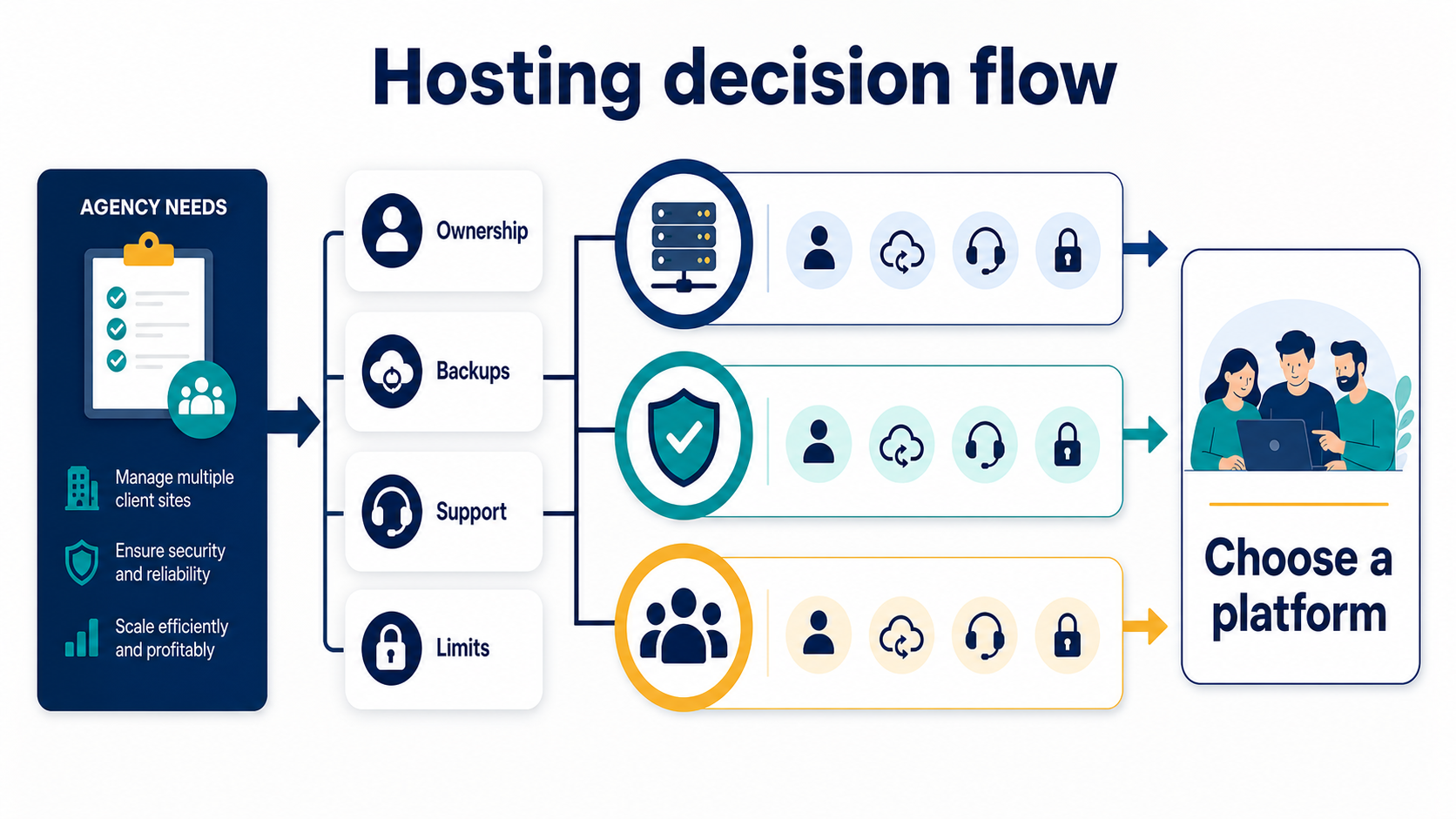
A written checklist fits agencies with several owners or client sites. A lightweight review fits repeatable low-risk work. An emergency path fits incidents where delay causes more user harm, but it still needs a post-change record.
Feature and cost comparison table
| Item | Example | Review question |
|---|---|---|
| Scope | Named files, URLs, and exclusions | Can another person identify the boundary? |
| Ownership | One approver and one executor | Is the decision accountable? |
| Rollback | A tested restore or reversal step | Can the change be reversed? |
| Readback | Public URL and user-journey checks | What evidence proves the result? |
Migration or implementation notes
- Write the exact scope and the paths that must not be touched.
- Record the current state, backup or snapshot, and rollback owner.
- Use staging when the workflow supports it and record differences.
- Read back the public page, redirects, images, forms, sitemap, and measurement.
- Keep the client-facing result factual and record any remaining follow-up.
Decision checklist
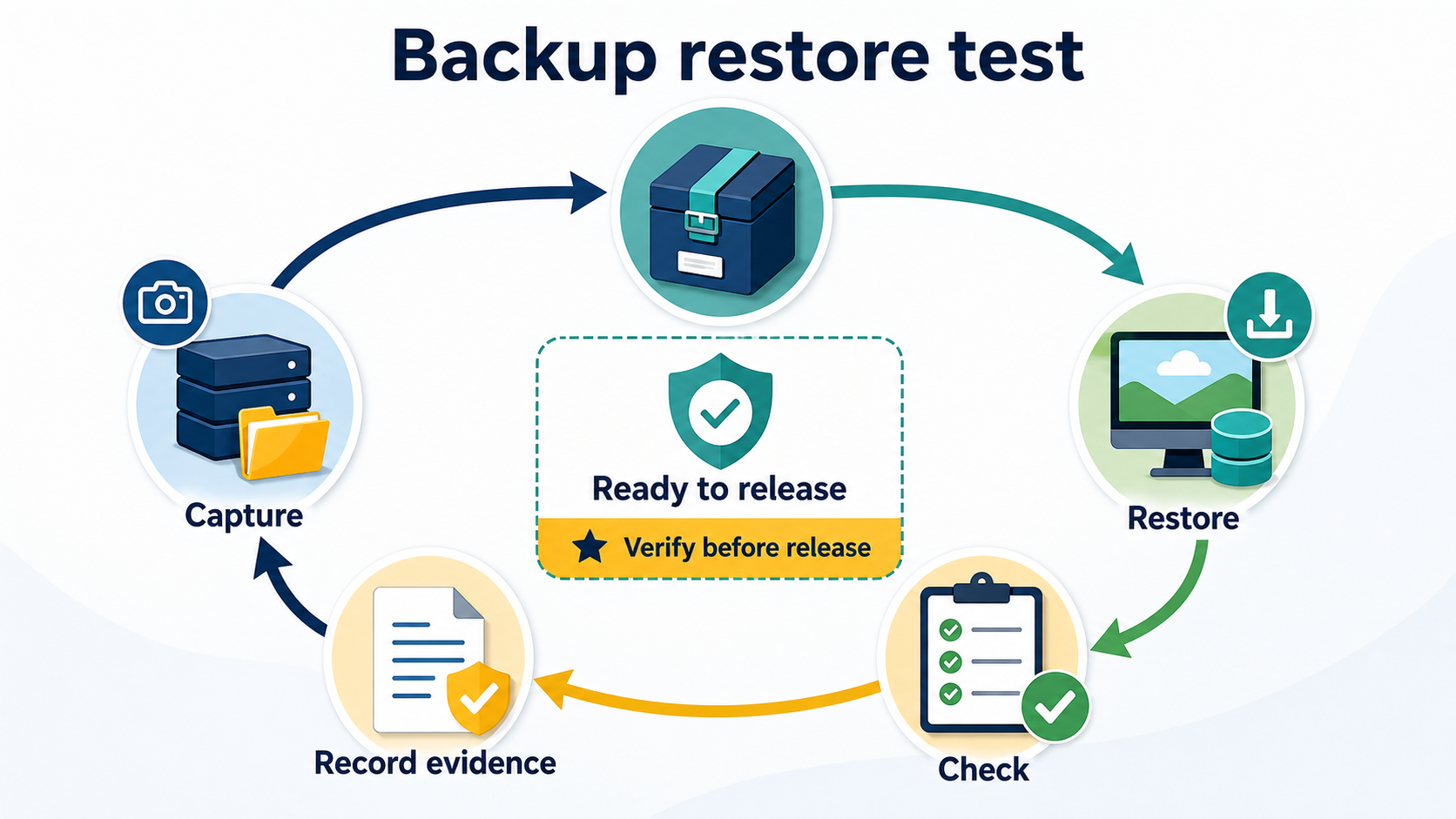
- The scope and exclusions are explicit.
- A named owner can stop the change.
- The rollback path is available.
- Public checks cover the important journey.
- The evidence is stored with the approval record.
FAQ
Does staging remove production risk?
No. Production settings, traffic, integrations, and content can differ. Keep public readback and rollback evidence.
Does a successful command prove a successful release?
No. The user-facing URL and the expected behavior still need to be checked.
What is the minimum record?
Scope, owner, timing, rollback, public checks, and outcome are a practical minimum.
Leave a Reply