
Category: 未分類

  • A Practical Client Site Backup Restore Test Checklist for WordPress Agencies

    A Practical Client Site Backup Restore Test Checklist for WordPress Agencies

    A client site backup restore test is useful when an agency can name the owner, the evidence, the public checks, and the rollback or follow-up step. Use this checklist to keep a routine decision separate from an assumption that a hosting change worked.

    Quick verdict

    Start with the scope of the client site backup restore test, then record who owns the decision and what must be checked publicly. Managed hosting can reduce routine infrastructure work, but it does not remove the need to verify forms, redirects, media, access, backups, and client communication.

    Who each option is for
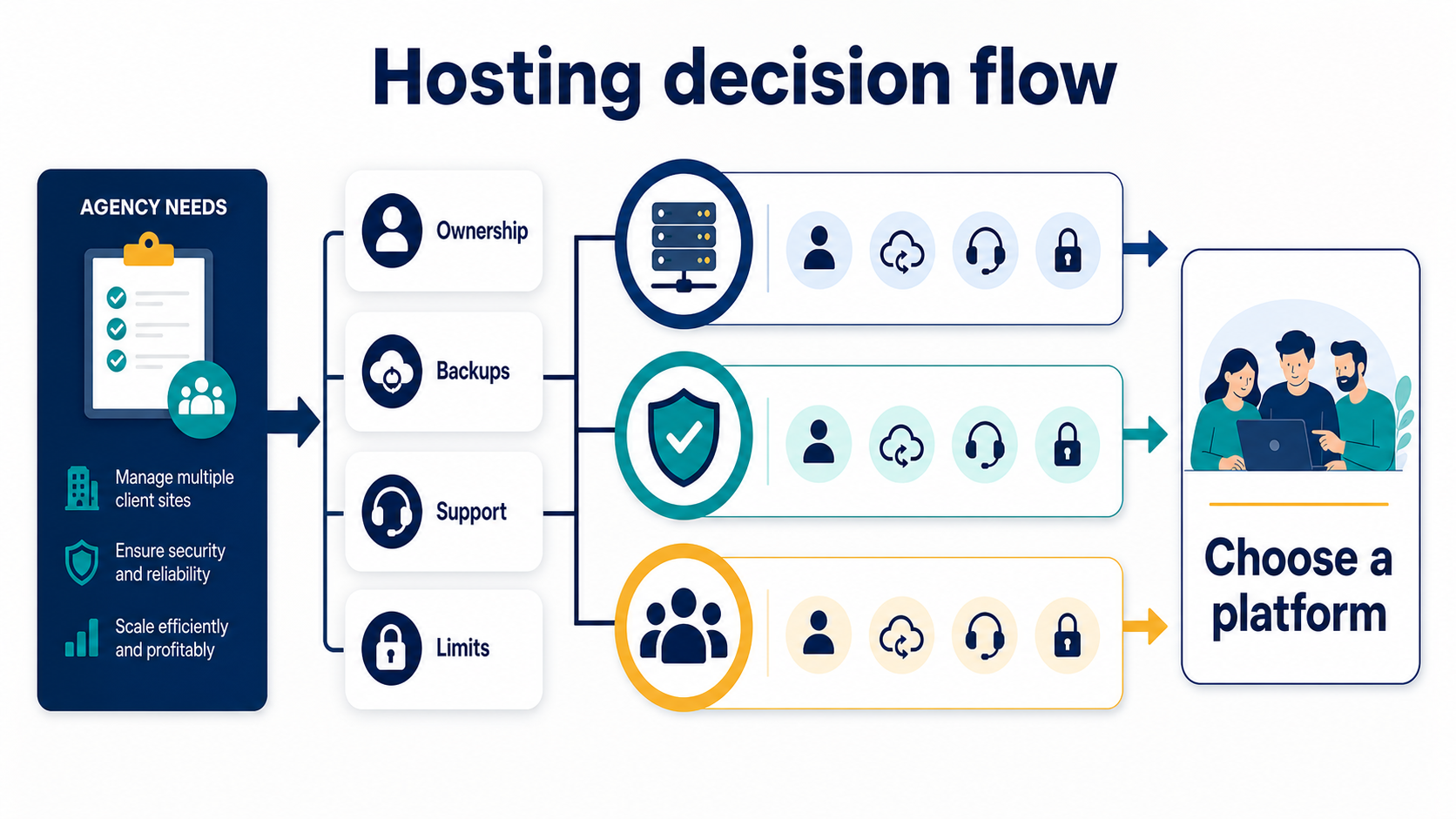
    Hosting decision flow

    A written checklist fits agencies with several owners or client sites. A lightweight review fits repeatable low-risk work. An emergency path fits incidents where delay causes more user harm, but it still needs a post-change record.

    Feature and cost comparison table

    Item Example Review question
    Scope Named files, URLs, and exclusions Can another person identify the boundary?
    Ownership One approver and one executor Is the decision accountable?
    Rollback A tested restore or reversal step Can the change be reversed?
    Readback Public URL and user-journey checks What evidence proves the result?

    Migration or implementation notes

    1. Write the exact scope and the paths that must not be touched.
    2. Record the current state, backup or snapshot, and rollback owner.
    3. Use staging when the workflow supports it and record differences.
    4. Read back the public page, redirects, images, forms, sitemap, and measurement.
    5. Keep the client-facing result factual and record any remaining follow-up.

    Decision checklist
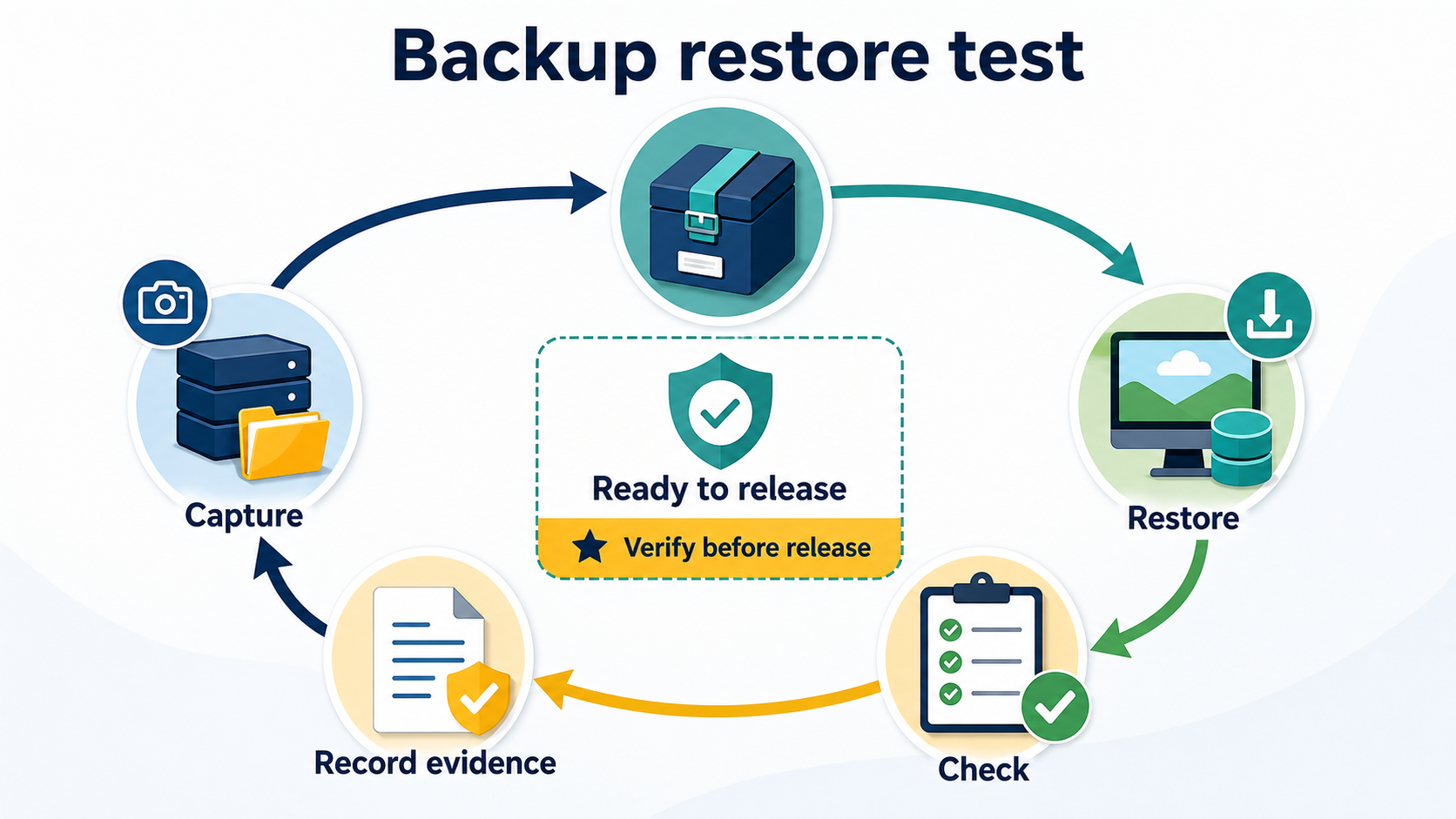
    Backup and restore test loop
    • The scope and exclusions are explicit.
    • A named owner can stop the change.
    • The rollback path is available.
    • Public checks cover the important journey.
    • The evidence is stored with the approval record.

    FAQ

    Does staging remove production risk?

    No. Production settings, traffic, integrations, and content can differ. Keep public readback and rollback evidence.

    Does a successful command prove a successful release?

    No. The user-facing URL and the expected behavior still need to be checked.

    What is the minimum record?

    Scope, owner, timing, rollback, public checks, and outcome are a practical minimum.
    Sources

  • A Practical Agency Hosting Ownership Review Checklist for WordPress Agencies

    A Practical Agency Hosting Ownership Review Checklist for WordPress Agencies

    A agency hosting ownership review is useful when an agency can name the owner, the evidence, the public checks, and the rollback or follow-up step. Use this checklist to keep a routine decision separate from an assumption that a hosting change worked.

    Quick verdict

    Start with the scope of the agency hosting ownership review, then record who owns the decision and what must be checked publicly. Managed hosting can reduce routine infrastructure work, but it does not remove the need to verify forms, redirects, media, access, backups, and client communication.

    Who each option is for

    Hosting decision flow

    A written checklist fits agencies with several owners or client sites. A lightweight review fits repeatable low-risk work. An emergency path fits incidents where delay causes more user harm, but it still needs a post-change record.

    Feature and cost comparison table

    Managed hosting comparison matrix
    Item Example Review question
    Scope Named files, URLs, and exclusions Can another person identify the boundary?
    Ownership One approver and one executor Is the decision accountable?
    Rollback A tested restore or reversal step Can the change be reversed?
    Readback Public URL and user-journey checks What evidence proves the result?

    Migration or implementation notes

    1. Write the exact scope and the paths that must not be touched.
    2. Record the current state, backup or snapshot, and rollback owner.
    3. Use staging when the workflow supports it and record differences.
    4. Read back the public page, redirects, images, forms, sitemap, and measurement.
    5. Keep the client-facing result factual and record any remaining follow-up.

    Decision checklist

    • The scope and exclusions are explicit.
    • A named owner can stop the change.
    • The rollback path is available.
    • Public checks cover the important journey.
    • The evidence is stored with the approval record.

    FAQ

    Does staging remove production risk?

    No. Production settings, traffic, integrations, and content can differ. Keep public readback and rollback evidence.

    Does a successful command prove a successful release?

    No. The user-facing URL and the expected behavior still need to be checked.

    What is the minimum record?

    Scope, owner, timing, rollback, public checks, and outcome are a practical minimum.
    Sources

  • A Practical Hosting Incident Communication Checklist for WordPress Agencies

    A Practical Hosting Incident Communication Checklist for WordPress Agencies

    A hosting incident communication is useful when an agency can name the owner, the evidence, the public checks, and the rollback or follow-up step. Use this checklist to keep a routine decision separate from an assumption that a hosting change worked.

    Quick verdict

    Start with the scope of the hosting incident communication, then record who owns the decision and what must be checked publicly. Managed hosting can reduce routine infrastructure work, but it does not remove the need to verify forms, redirects, media, access, backups, and client communication.

    Who each option is for

    Hosting decision flow

    A written checklist fits agencies with several owners or client sites. A lightweight review fits repeatable low-risk work. An emergency path fits incidents where delay causes more user harm, but it still needs a post-change record.

    Feature and cost comparison table

    Item Example Review question
    Scope Named files, URLs, and exclusions Can another person identify the boundary?
    Ownership One approver and one executor Is the decision accountable?
    Rollback A tested restore or reversal step Can the change be reversed?
    Readback Public URL and user-journey checks What evidence proves the result?

    Migration or implementation notes

    1. Write the exact scope and the paths that must not be touched.
    2. Record the current state, backup or snapshot, and rollback owner.
    3. Use staging when the workflow supports it and record differences.
    4. Read back the public page, redirects, images, forms, sitemap, and measurement.
    5. Keep the client-facing result factual and record any remaining follow-up.

    Decision checklist

    • The scope and exclusions are explicit.
    • A named owner can stop the change.
    • The rollback path is available.
    • Public checks cover the important journey.
    • The evidence is stored with the approval record.

    FAQ

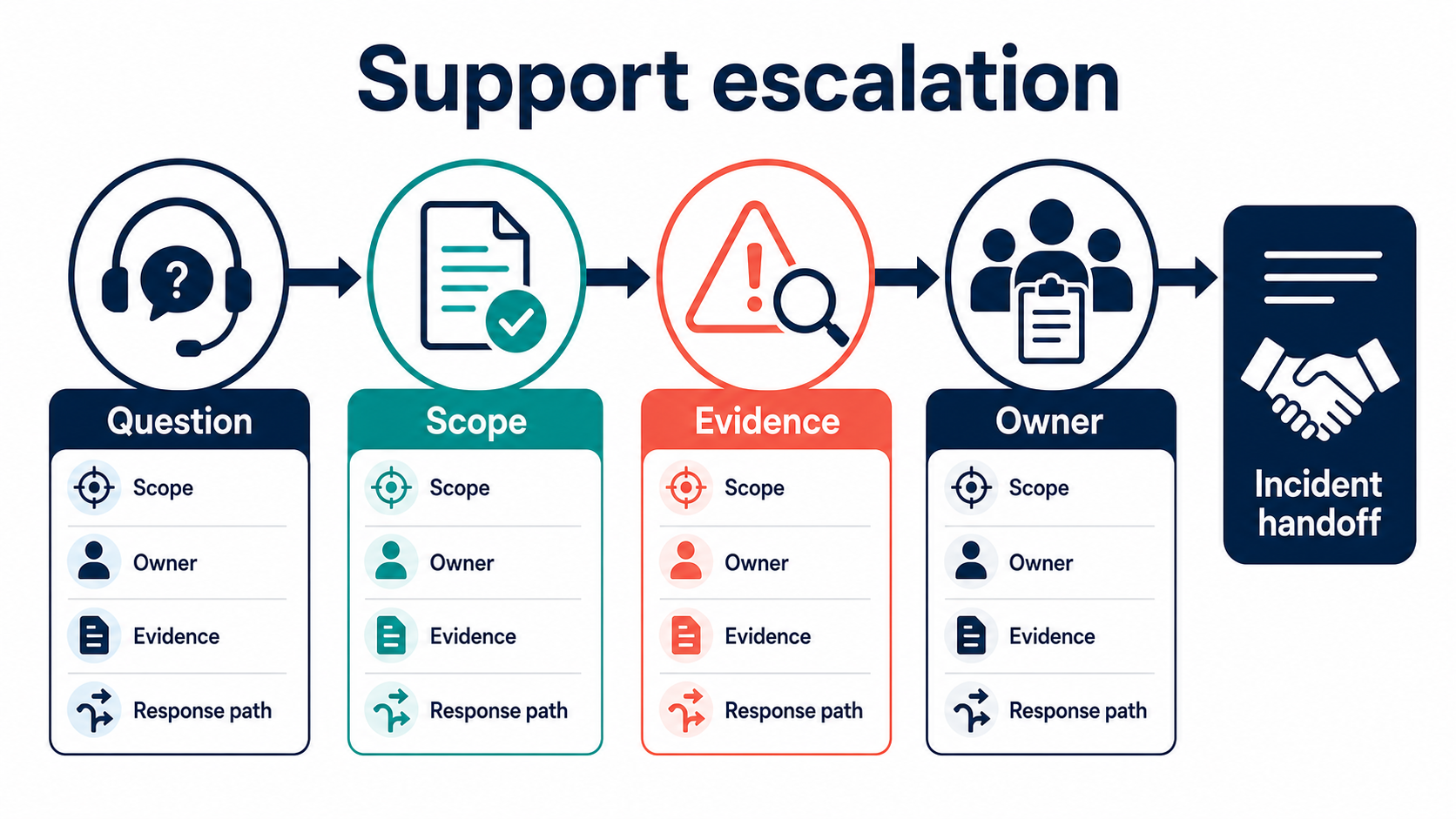
    Support escalation path
    Does staging remove production risk?

    No. Production settings, traffic, integrations, and content can differ. Keep public readback and rollback evidence.

    Does a successful command prove a successful release?

    No. The user-facing URL and the expected behavior still need to be checked.

    What is the minimum record?

    Scope, owner, timing, rollback, public checks, and outcome are a practical minimum.
    Sources

  • A Practical Agency Staging Handoff Checklist for WordPress Agencies

    A Practical Agency Staging Handoff Checklist for WordPress Agencies

    A agency staging handoff is useful when an agency can name the owner, the evidence, the public checks, and the rollback or follow-up step. Use this checklist to keep a routine decision separate from an assumption that a hosting change worked.

    Quick verdict

    Start with the scope of the agency staging handoff, then record who owns the decision and what must be checked publicly. Managed hosting can reduce routine infrastructure work, but it does not remove the need to verify forms, redirects, media, access, backups, and client communication.

    Who each option is for

    A written checklist fits agencies with several owners or client sites. A lightweight review fits repeatable low-risk work. An emergency path fits incidents where delay causes more user harm, but it still needs a post-change record.

    Feature and cost comparison table

    Item Example Review question
    Scope Named files, URLs, and exclusions Can another person identify the boundary?
    Ownership One approver and one executor Is the decision accountable?
    Rollback A tested restore or reversal step Can the change be reversed?
    Readback Public URL and user-journey checks What evidence proves the result?

    Migration or implementation notes

    1. Write the exact scope and the paths that must not be touched.
    2. Record the current state, backup or snapshot, and rollback owner.
    3. Use staging when the workflow supports it and record differences.
    4. Read back the public page, redirects, images, forms, sitemap, and measurement.
    5. Keep the client-facing result factual and record any remaining follow-up.

    Decision checklist

    • The scope and exclusions are explicit.
    • A named owner can stop the change.
    • The rollback path is available.
    • Public checks cover the important journey.
    • The evidence is stored with the approval record.

    FAQ

    Does staging remove production risk?

    No. Production settings, traffic, integrations, and content can differ. Keep public readback and rollback evidence.

    Does a successful command prove a successful release?

    No. The user-facing URL and the expected behavior still need to be checked.

    What is the minimum record?

    Scope, owner, timing, rollback, public checks, and outcome are a practical minimum.
    Sources

  • Managed WordPress Hosting for Agencies: A Practical Comparison Checklist

    Agency team reviewing a managed WordPress hosting workflow

    For an agency, the best hosting choice is the one whose ownership model matches the work your team can actually support. Compare client access, staging, backups, updates, migration, support, and rollback before comparing a headline price.

    Quick verdict

    Managed WordPress hosting can reduce routine infrastructure work, but it does not remove the need for public checks and a rollback owner. A self-managed VPS may fit a team with real infrastructure coverage; shared hosting may fit a low-risk site with modest requirements.

    Key takeaways

    Hosting decision flow
    • Choose by operating responsibility, not by the lowest monthly number.
    • Confirm how staging, backups, restores, updates, and support work in writing.
    • Keep the old environment available until the public migration readback passes.

    Who each option is for

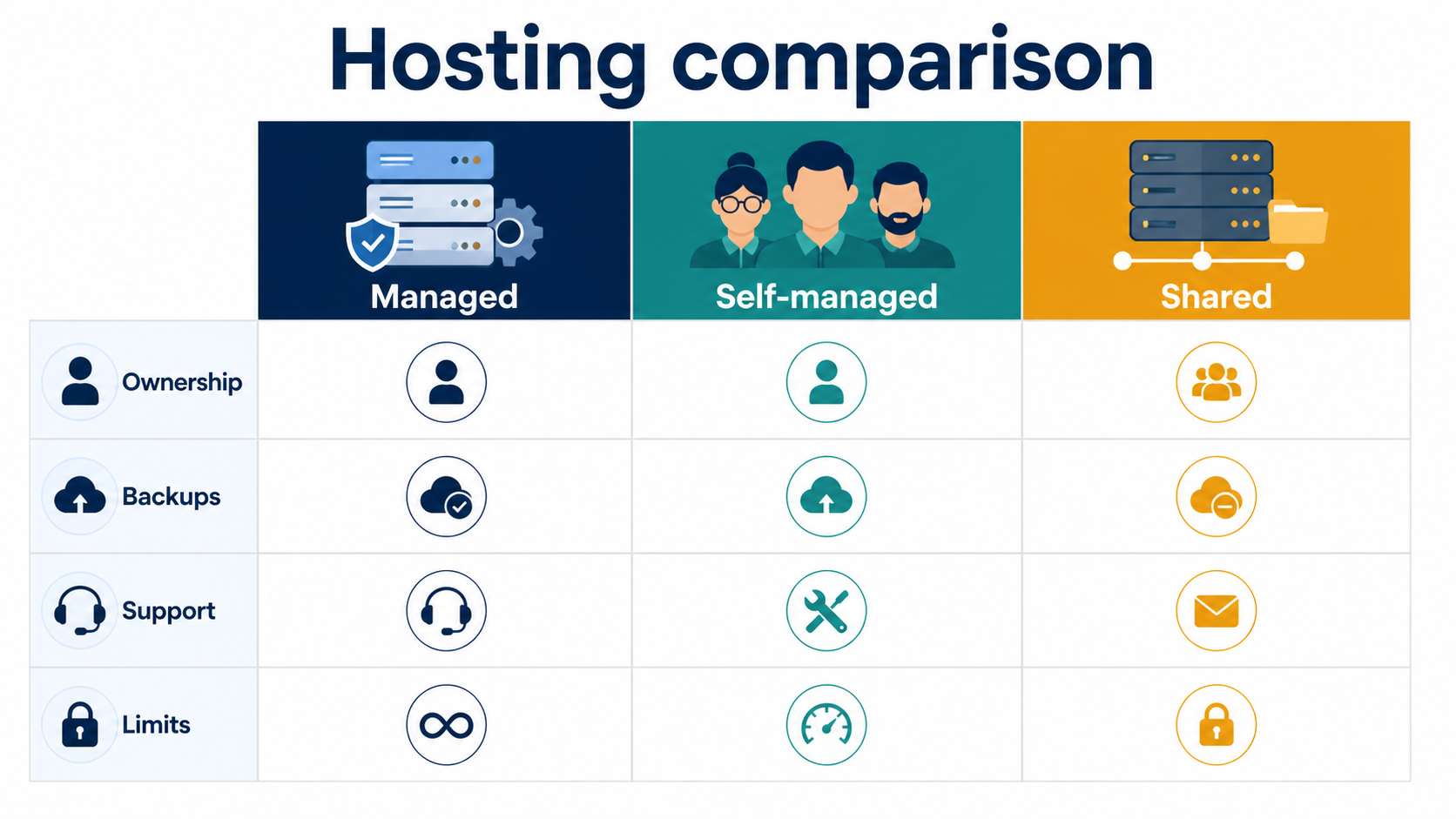
    Managed hosting comparison matrix
    Model Good fit Question to answer
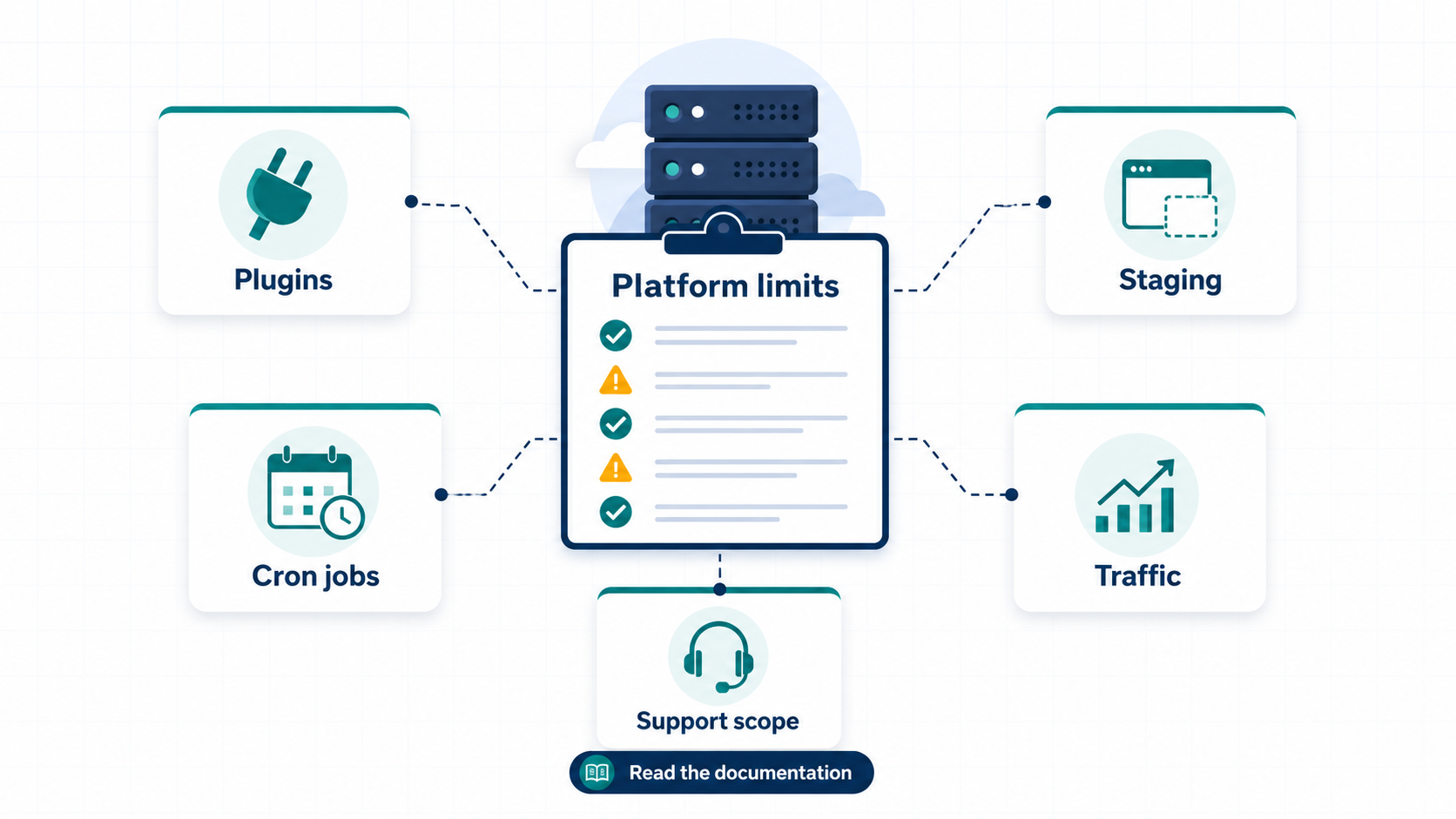
    Managed WordPress Teams that want a defined WordPress platform Which limits and support boundaries apply?
    Self-managed VPS Teams with patching, monitoring, backup, and incident ownership Who is on call when the site fails?
    Shared hosting Simple, low-risk sites with modest traffic What happens when resources are shared?

    Comparison checklist

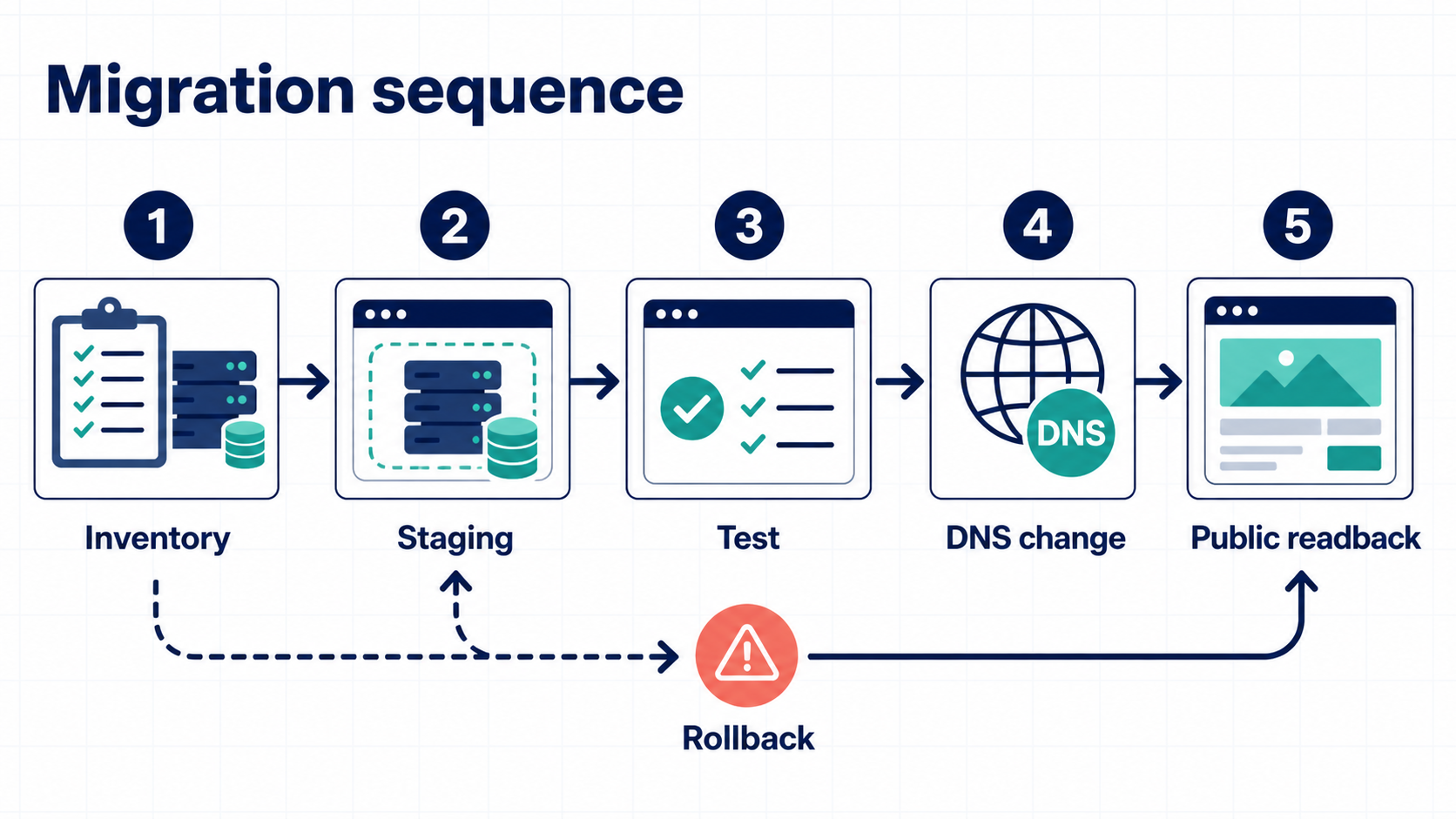
    Migration sequence
    Area Evidence to collect Decision signal
    Staging Clone, test, and promotion steps Can the team test without guessing?
    Backups Retention and a tested restore Can a restore be completed?
    Support Scope, hours, escalation path Who handles the next incident?
    Migration Redirect, media, form, and DNS checklist Can the public result be read back?

    Implementation sequence

    Backup and restore test loop
    1. Inventory URLs, redirects, media, forms, plugins, analytics, and scheduled jobs.
    2. Build a staging copy and record versions and differences.
    3. Test the highest-value user journeys and document rollback.
    4. Change DNS only after the owner and migration window are clear.
    5. Keep the previous host until public URLs, images, forms, and measurement pass.

    For the operational detail, see our migration rollback checklist and maintenance-window planning guide.

    FAQ

    Support escalation path
    Is managed hosting always faster?

    No. Performance depends on the workload, configuration, assets, and platform. Treat a benchmark as evidence for one workload, not a universal promise.

    Should an agency use one host for every client?

    A standard platform can reduce variation, but document exceptions when a client needs another model.

    What should be checked after migration?

    Check the home page, key pages, forms, login, redirects, media, sitemap, analytics, and rollback evidence.

    Sources

    Platform limits review
  • A Practical WordPress Maintenance Window Planning Checklist for WordPress Agencies

    A Practical WordPress Maintenance Window Planning Checklist for WordPress Agencies

    A WordPress maintenance window planning is useful when an agency can name the owner, the evidence, the public checks, and the rollback or follow-up step. Use this checklist to keep a routine decision separate from an assumption that a hosting change worked.

    Quick verdict

    Start with the scope of the WordPress maintenance window planning, then record who owns the decision and what must be checked publicly. Managed hosting can reduce routine infrastructure work, but it does not remove the need to verify forms, redirects, media, access, backups, and client communication.

    Who each option is for

    A written checklist fits agencies with several owners or client sites. A lightweight review fits repeatable low-risk work. An emergency path fits incidents where delay causes more user harm, but it still needs a post-change record.

    Feature and cost comparison table

    Item Example Review question
    Scope Named files, URLs, and exclusions Can another person identify the boundary?
    Ownership One approver and one executor Is the decision accountable?
    Rollback A tested restore or reversal step Can the change be reversed?
    Readback Public URL and user-journey checks What evidence proves the result?

    Migration or implementation notes

    1. Write the exact scope and the paths that must not be touched.
    2. Record the current state, backup or snapshot, and rollback owner.
    3. Use staging when the workflow supports it and record differences.
    4. Read back the public page, redirects, images, forms, sitemap, and measurement.
    5. Keep the client-facing result factual and record any remaining follow-up.

    Decision checklist

    • The scope and exclusions are explicit.
    • A named owner can stop the change.
    • The rollback path is available.
    • Public checks cover the important journey.
    • The evidence is stored with the approval record.

    FAQ

    Does staging remove production risk?

    No. Production settings, traffic, integrations, and content can differ. Keep public readback and rollback evidence.

    Does a successful command prove a successful release?

    No. The user-facing URL and the expected behavior still need to be checked.

    What is the minimum record?

    Scope, owner, timing, rollback, public checks, and outcome are a practical minimum.

    Sources

  • A Practical Multi-Site Release Checklist Checklist for WordPress Agencies

    A multi-site release checklist is useful when an agency can name the owner, the evidence, the public checks, and the rollback or follow-up step. Use this checklist to keep a routine decision separate from an assumption that a hosting change worked.

    Quick verdict

    Start with the scope of the multi-site release checklist, then record who owns the decision and what must be checked publicly. Managed hosting can reduce routine infrastructure work, but it does not remove the need to verify forms, redirects, media, access, backups, and client communication.

    Who each option is for

    A written checklist fits agencies with several owners or client sites. A lightweight review fits repeatable low-risk work. An emergency path fits incidents where delay causes more user harm, but it still needs a post-change record.

    Feature and cost comparison table

    Item Example Review question
    Scope Named files, URLs, and exclusions Can another person identify the boundary?
    Ownership One approver and one executor Is the decision accountable?
    Rollback A tested restore or reversal step Can the change be reversed?
    Readback Public URL and user-journey checks What evidence proves the result?

    Migration or implementation notes

    1. Write the exact scope and the paths that must not be touched.
    2. Record the current state, backup or snapshot, and rollback owner.
    3. Use staging when the workflow supports it and record differences.
    4. Read back the public page, redirects, images, forms, sitemap, and measurement.
    5. Keep the client-facing result factual and record any remaining follow-up.

    Decision checklist

    • The scope and exclusions are explicit.
    • A named owner can stop the change.
    • The rollback path is available.
    • Public checks cover the important journey.
    • The evidence is stored with the approval record.

    FAQ

    Does staging remove production risk?

    No. Production settings, traffic, integrations, and content can differ. Keep public readback and rollback evidence.

    Does a successful command prove a successful release?

    No. The user-facing URL and the expected behavior still need to be checked.

    What is the minimum record?

    Scope, owner, timing, rollback, public checks, and outcome are a practical minimum.

    Sources

  • A Change-Approval Checklist for Agencies Managing WordPress Hosting

    A hosting change is ready when the agency can explain the user impact, the owner, the rollback path, and the public checks that will prove the change worked. This checklist keeps approval separate from optimism and keeps client communication tied to evidence.

    Quick verdict

    Use a written change-approval checklist when an agency manages multiple WordPress sites or shared operational responsibility. A small change can still affect forms, redirects, caching, media, cron jobs, and measurement, so approval should confirm scope and rollback rather than assume that a successful command means a successful release.

    Who each option is for

    Workflow Best fit Trade-off to confirm
    Ticket plus approval record Teams with several owners or clients More preparation before a change
    Lightweight checklist Small teams making low-risk, repeatable changes Requires discipline to keep evidence
    Emergency change path Incidents where delay increases user harm Requires a post-change review and rollback owner

    Feature and cost comparison table

    Approval question Why it matters Evidence to collect
    What is changing? Unbounded scope makes rollback ambiguous Files, URLs, settings, and exclusions
    Who owns the decision? Multiple informal approvals slow recovery Named owner and timestamp
    How is it reversed? A backup is not the same as a tested rollback Rollback steps and restore point
    What is checked publicly? Internal success can hide a broken journey URLs, forms, redirects, images, and logs

    Migration or implementation notes

    1. Write the change scope and list the paths that must not be touched.
    2. Record the current version, backup or snapshot, and rollback owner.
    3. Test the change on staging when the workflow supports it.
    4. Deploy during a window with a clear observation period.
    5. Read back the home page, high-value journeys, redirects, media, sitemap, and measurement.
    6. Record the result and any follow-up instead of closing the task on exit code alone.

    Use the WordPress Developer Resources as a primary reference for API behavior, then verify the actual public site and the agency’s own release evidence.

    Decision checklist

    • The scope names the exact site path and exclusions.
    • A named owner can approve or stop the change.
    • The rollback path is available and understandable.
    • Public readback checks cover the user journeys that matter.
    • Client communication describes facts, not an unverified success assumption.

    FAQ

    Does staging approval remove production risk?

    No. It reduces some unknowns, but production configuration, traffic, integrations, and content can differ. Keep a public readback and rollback plan.

    Should every change use the emergency path?

    No. Use it only when the incident risk of waiting is greater than the change risk, and complete the missing review afterward.

    What is the minimum approval record?

    Scope, owner, timing, rollback, public checks, and outcome are a practical minimum. Add detail when the change affects many sites or a critical journey.

    Sources

  • A Staging Approval Workflow for Managed WordPress Sites

    Staging is valuable when it answers a specific production question. Give every change an owner, a test list, and a decision record so a green staging result does not become an unexamined production change.

    Quick verdict

    Use staging for changes that can affect content, templates, forms, performance, or measurement. Approve a release only when the test result is attached to the exact change and the production rollback path is still available.

    Who each option is for

    Workflow Best fit Trade-off
    One reviewer Small sites with low-risk changes Fast, but a single person owns both change and review
    Two-person review Client sites with forms or revenue paths More time, with an independent check
    Scheduled release Teams coordinating several sites Needs a release window and clear freeze point

    Feature and cost comparison table

    Approval item Question Proof
    Scope What exactly changes? Ticket, URL list, or diff
    Content Are visible words and links correct? Page review and link checks
    Behavior Do forms, navigation, and tracking work? Fresh-browser test results
    Rollback How is the change reversed? Backup, release record, or revert steps

    Migration or implementation notes

    1. Copy the production URL list and identify the pages that carry the most user value.
    2. Apply the change in staging and record the version or timestamp.
    3. Test desktop and mobile layout, forms, redirects, media, canonical tags, and measurement.
    4. Have a reviewer check the visible result without relying on the implementer’s memory.
    5. Release during a window where the owner can read back the public pages and reverse the change.

    The Kinsta staging reference can be paired with the WordPress API documentation when a workflow includes programmatic checks.

    Decision checklist

    • The change has one named owner and one reviewer.
    • The affected URLs and acceptance checks are written down.
    • Every form and measurement path was tested from a fresh session.
    • Production timing and rollback ownership are explicit.
    • The release result is recorded after public readback.

    FAQ

    Can a screenshot approve a release?

    A screenshot helps with visual review, but it does not prove forms, redirects, links, or measurement. Pair it with functional checks.

    Should every plugin change use staging?

    Use the risk of the change to decide, but changes that affect public output, forms, security, or compatibility deserve a controlled test.

    Who should approve a client-facing change?

    Someone who can assess the acceptance checks and has authority to pause the release. The implementer can be the reviewer only when the risk and team size justify it.

    Sources

  • Managed WordPress Hosting Migration: A Rollback Checklist

    A migration is safer when rollback is a planned decision, not an emergency guess. Before changing DNS, record the current site, test the destination, and define the evidence that lets the owner keep or reverse the change.

    Quick verdict

    Keep the source environment available until the destination passes the agreed public checks. A managed host can simplify platform work, but it does not remove the need to inventory content, test forms, confirm redirects, or assign a rollback owner.

    Who each option is for

    Approach Best fit Question to answer
    Managed migration service Teams that want a defined handoff and platform support What is included and who owns the cutover?
    Team-led migration Teams with a tested runbook and technical owner Who can restore the source if a check fails?
    Staged rebuild Sites that need a controlled content or plugin change How will old and new URLs be compared?

    Feature and cost comparison table

    Control Why it matters Evidence
    Full content inventory Missing media or forms can appear after launch URL, media, form, redirect, and cron lists
    Staging copy Changes can be tested without changing the public site Staging URL and test result
    Rollback window DNS changes need an owner and a decision time Named owner, cutoff, and source access
    Restore evidence A backup is useful only when it can be restored Restore test and timestamp

    Migration or implementation notes

    1. Record the source WordPress, PHP, theme, plugin, DNS, and redirect state.
    2. Copy the site to staging and compare the home page, key pages, media, forms, login, and canonical URLs.
    3. Test the highest-value user journeys with cache and security settings enabled.
    4. Lower DNS TTL only after the rollback owner and cutover window are written down.
    5. After DNS changes, check the public site from a fresh browser and keep the source available until the checks pass.

    Use the WordPress moving documentation as a reference for the parts that must be verified during a move.

    Decision checklist

    • We have the source URL and destination URL recorded.
    • We tested forms, redirects, media, login, sitemap, and measurement.
    • We have a named rollback owner and decision time.
    • We know which DNS records change and how to restore them.
    • We will keep the source available until public readback passes.

    FAQ

    Should the old host be deleted immediately?

    No. Keep it available for the agreed rollback window and confirm that no required data still arrives there.

    Does a staging check prove production is correct?

    No. Production can differ because of DNS, caching, permissions, or environment settings. Perform a public readback after cutover.

    What is the first rollback signal?

    Use the written acceptance checks. A broken form, missing page, bad redirect, or failed login is a concrete reason to pause and investigate.

    Sources